
We may earn money or products from the companies mentioned in this post.
A scoop of collagen floating on coffee can turn an easy morning routine into a lumpy drink. The first decision is which powder is in the tub: hydrolyzed collagen peptides and gelatin behave differently, and a flavored collagen creamer has ingredients that plain peptides do not. Then follow the mixing directions on your own package.
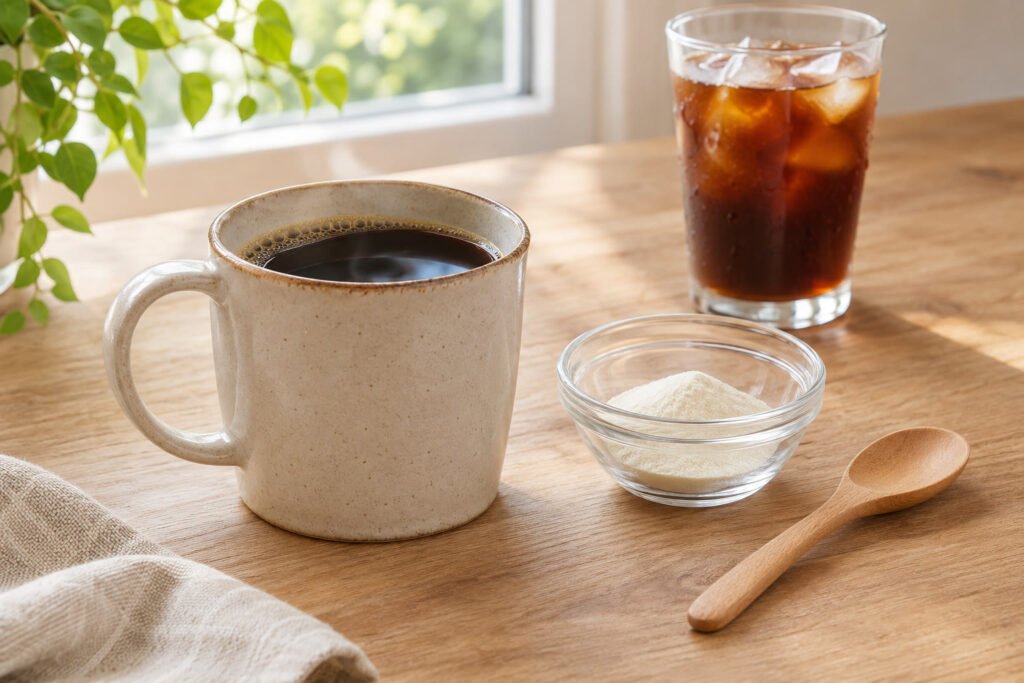
Quick answer: For hot coffee, add an unflavored collagen peptide powder and stir thoroughly, as the product label directs. For iced coffee, mix it into a small amount of room-temperature or lukewarm liquid first, then add the cold coffee and ice. Those are practical manufacturer-backed methods, not results from our own taste or dissolving test. No mixing method proves a health benefit.
Choose peptides, and read the exact label
Hydrolyzed collagen is processed into smaller peptides. Vital Proteins says its Original Collagen Peptides mix into hot or cold drinks and distinguishes them from Beef Gelatin, which thickens liquids. A coffee creamer blend can contain flavors, sweeteners, fats, or other ingredients; read its ingredient list separately rather than assuming it is the same one-ingredient powder. See Vital Proteins' product FAQ for its stated difference between peptides and gelatin.
The label matters more than the word “collagen” on the front. Check the animal source and allergens, whether the product is unflavored, the amount of powder in a serving, and the ingredient list. Our hydrolyzed collagen label guide explains the terminology in more detail.
Mixing into hot and iced coffee
| Drink | A practical starting method | Source and limitation |
|---|---|---|
| Hot coffee | Add the powder to the mug and stir thoroughly until dispersed. A clean frother may help if the label permits it. | Vital Proteins recommends thorough stirring in hot drinks and offers a frother as an option. |
| Iced coffee or cold brew | Stir powder into a small amount of room-temperature or lukewarm water first, then add cold coffee and ice. | Sports Research suggests room-temperature liquid before ice; Vital Proteins suggests lukewarm liquid before topping with cold liquid. |
These are starting methods, not guarantees that every brand will dissolve the same way. Vital Proteins' clumping advice covers hot and cold liquids. The Sports Research 16 oz product label says to mix into room-temperature liquid before adding ice because cold liquid may clump.
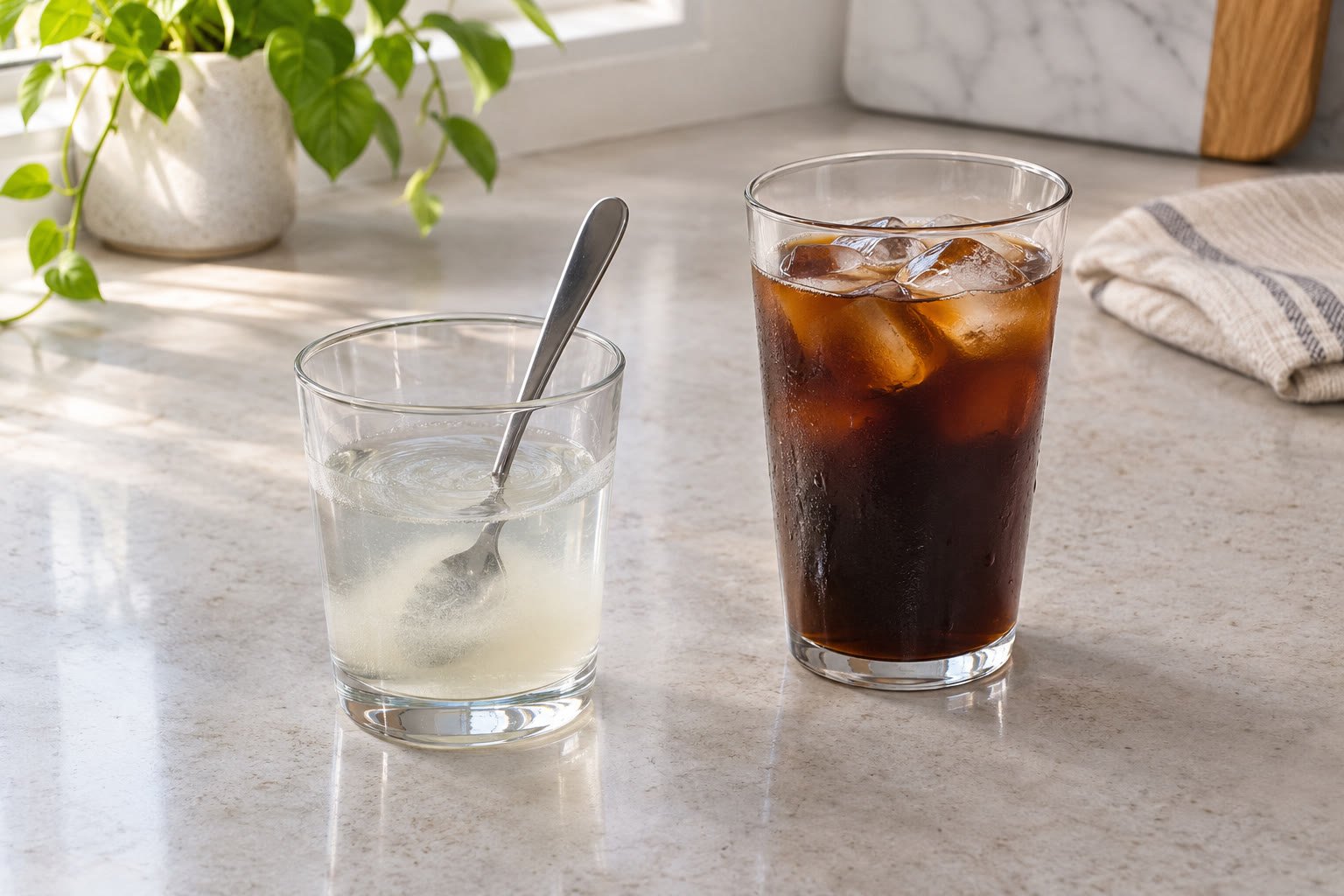
If you use a shaker, keep it for a cool drink, with the lid secured. Do not seal hot coffee in a shaker: pressure and splashing can cause burns. A mug and spoon or frother are simpler for hot coffee. Adding creamer and sugar after the powder is dispersed can make it easier to see which ingredient is causing a lump.
If the powder still clumps
- Check the powder before mixing. Keep the container sealed and use a dry scoop. Follow the package's storage directions. If the powder itself has hardened or seems changed, check the label and contact the manufacturer rather than assuming it is fine.
- Give the powder enough liquid. Stir a modest amount into a larger portion of coffee or room-temperature liquid before adding more powder. The brand's labeled serving is a reference, not a promise that it will disappear instantly in a tiny espresso cup.
- Break up a new lump. Press it against the mug wall with a spoon or use a clean frother in an open mug. Mixing technique may help; this guide has not measured a success rate.
- Check for added ingredients. A sweetened creamer blend may behave differently from plain peptides. Read its directions rather than applying a method from another product.
Mix a drink for immediate use unless the manufacturer provides specific instructions for storing it after preparation. Storage directions for the dry powder do not automatically apply to a premixed liquid.
Does hot coffee change collagen?
Brand directions allowing hot beverages establish that those products are intended to be mixed that way. They do not, by themselves, prove that coffee temperature has no chemical effect or that a health outcome will follow.
There is a more relevant human study than a label claim: a 2025 randomized crossover study compared one bovine collagen hydrolysate dose in coffee and water. It reported similar blood-exposure measures for the specific collagen-derived peptides it tracked, although some free amino-acid patterns differed. Several authors were affiliated with a collagen ingredient supplier. The study did not compare a range of brewing temperatures or test changes in skin and joint health. It therefore cannot establish that every powder works identically in every hot drink.
If your product gives a temperature limit, follow it. Letting coffee cool first is a personal preference if you want to do so; the evidence above does not require that step for every peptide powder.
Compare serving sizes, ingredients, and cost
A “scoop” is not a standard unit across brands. For example, the reviewed Sports Research Unflavored 16 oz label lists one 11 g scoop with 11 g collagen and 10 g protein; the Vital Proteins Original Unflavored 19.3 oz label lists four level tablespoons (20 g) with 20 g collagen and 18 g protein. These are product-specific label examples, not recommended amounts for every reader. See our Sports Research review and Vital Proteins Original review for the pictured panels.
Collagen grams and protein grams are not necessarily identical. If you want to compare prices, divide each package's current price by its labeled number of servings × collagen grams per serving; multiply that result by 10 for an approximate cost per 10 g collagen. Rounded serving counts make the result approximate. Check whether the formula includes vitamin C, biotin, hyaluronic acid, creamer ingredients, or flavoring, and read the allergen and facility statements for the exact package.
Dietary supplements are regulated, but the FDA does not approve them for safety and effectiveness before marketing. A testing logo or manufacturer claim needs its own scope check; it is not evidence of a skin or joint result. The site’s broader collagen selection guide covers sources and formats beyond coffee use.
Frequently asked questions
Can I use gelatin instead?
Gelatin is derived from collagen but can thicken or gel as a drink cools. If you want a drink without that change, look for a product labeled hydrolyzed collagen peptides and follow its mixing directions.
Does iced coffee work?
Many peptide powders are marketed for cold drinks, but a particular product may clump. The manufacturer methods reviewed above begin with room-temperature or lukewarm liquid before cold coffee and ice.
Will I taste the powder?
This article has no firsthand taste test, and “unflavored” does not guarantee an imperceptible taste or texture. Check the ingredient list and try the product according to its label before judging your preferred coffee ratio.
How much powder should I add?
Read the serving weight in grams on your package and use an amount that fits your needs. A Sports Research scoop and Vital Proteins' tablespoon measure are different serving systems. A clinician or dietitian can advise you if a medical condition or allergy affects supplement use.
Bottom line
For collagen powder for coffee, match the product form to the drink: plain hydrolyzed peptides are different from gelatin or a flavored creamer. Stir thoroughly in hot coffee; for iced coffee, use room-temperature or lukewarm liquid first if the label recommends it. Compare products by their actual ingredient and serving panels, and keep mixing claims separate from claims about health outcomes.