
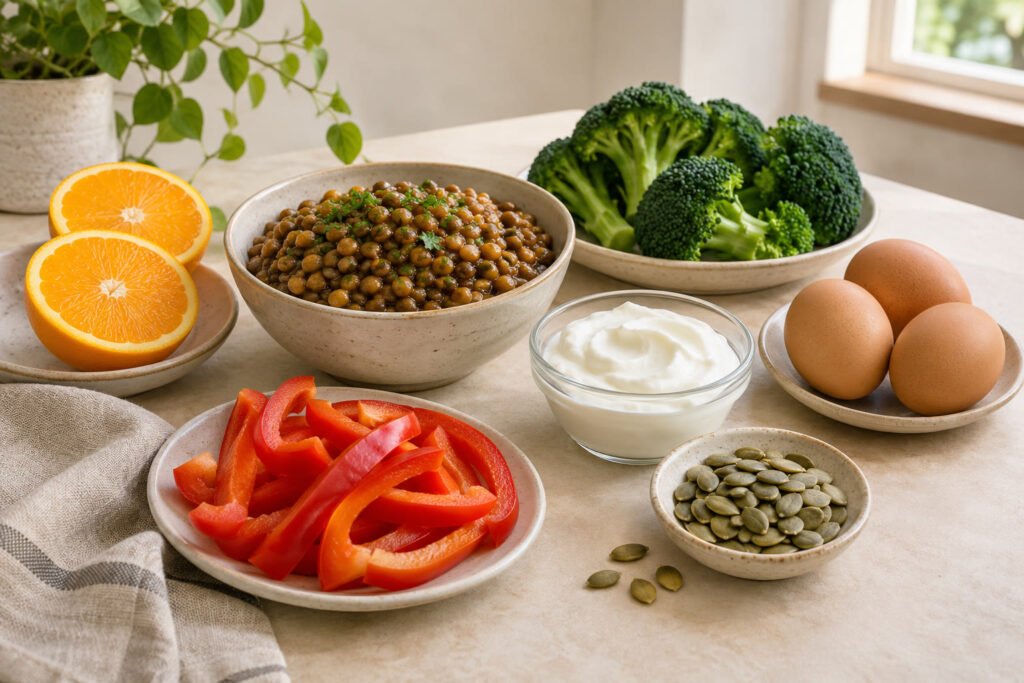
We may earn money or products from the companies mentioned in this post.
Wondering whether bone broth, oranges, or a collagen powder belongs on your shopping list? The distinction is simple: some animal foods contain collagen, while many everyday foods supply nutrients your body uses to make its own. You do not need a special “collagen diet” to assemble meals with protein and vitamin C.
Quick answer: Eat a variety of protein foods, include fruits or vegetables that supply vitamin C, and get minerals such as copper and zinc from a varied diet. These choices support normal nutrition; no particular meal guarantees firmer skin, fewer wrinkles, or joint relief. This is a food guide, not a firsthand supplement review.
Collagen-containing foods and supporting nutrients
Collagen is an animal protein found in connective tissue. Foods made with skin, cartilage, or other collagen-rich animal parts can contain collagen or gelatin; examples include chicken or fish skin, gelatin, and some broths. The amount in broth varies, so a label is more useful than assuming every cup provides a substantial protein serving.
Your digestive system breaks dietary proteins, including collagen, into amino acids and smaller peptides. Eating a collagen-containing food does not send intact collagen straight to your skin or joints. Beans, eggs, fish, tofu, dairy, and other protein foods provide amino acids, while produce supplies vitamin C. Both categories can fit into ordinary meals.
Nutrients involved in collagen formation
| Nutrient | Practical role | Food examples |
|---|---|---|
| Protein | Supplies amino acids for the body's proteins | Eggs, fish, poultry, yogurt, beans, lentils, tofu |
| Vitamin C | Required for normal collagen biosynthesis | Red bell pepper, citrus, kiwi, strawberries, broccoli |
| Copper | Supports enzymes involved in connective-tissue synthesis | Shellfish, nuts, seeds, whole grains |
| Zinc | Supports protein synthesis and wound healing | Oysters, meat, eggs, dairy, beans, pumpkin seeds |
This is a food-planning guide, not a reason to add four separate supplements. The NIH Office of Dietary Supplements identifies vitamin C as necessary for collagen formation. Its copper and zinc fact sheets explain those minerals' roles and food sources. A deficiency can matter, but these nutrient roles do not prove that taking more than you need will produce visible extra collagen.
Protein foods
The adult protein Recommended Dietary Allowance is 0.8 g per kilogram of body weight per day for generally healthy adults. That is about 54 g for someone weighing 150 pounds (68 kg × 0.8). It is a general reference value, not a personal target for every age, activity level, pregnancy status, or medical condition. A National Academies evidence review describes the current reference value.
Build meals around foods you enjoy: eggs or yogurt at breakfast, beans or tofu at lunch, and fish, poultry, or another protein food at dinner. Gelatin and collagen are incomplete proteins because they lack enough of the essential amino acid tryptophan, so use them as additions rather than the only protein source in a meal. If you have kidney disease or another condition that affects protein advice, ask your clinician or dietitian for an individual target.
Vitamin C foods
For adults who are not pregnant or breastfeeding, the vitamin C RDA is 90 mg for men and 75 mg for women; people who smoke need another 35 mg per day. You can get vitamin C from foods without calculating every bite. The NIH food-source table gives examples: half a cup of raw red pepper has about 95 mg, a medium orange about 70 mg, a medium kiwi about 64 mg, and half a cup of cooked broccoli about 51 mg. Amounts vary with produce and preparation.
Cooking and long storage can reduce vitamin C. Steaming or microwaving may limit some cooking losses compared with prolonged boiling, but cooked vegetables still contribute. Vitamin C also helps the body absorb iron from plant foods: beans with bell pepper, or lentils with lemon, are easy pairings. For the nutrient's requirements and supplement questions, see our vitamin C for collagen production guide.
Copper and zinc foods
Shellfish, nuts, and seeds are copper sources; meat, seafood, dairy, eggs, and legumes can contribute zinc. A mixed diet gives you more than a single “superfood.” Plant sources of zinc can be less readily absorbed than animal sources, so people with restrictive diets may benefit from individualized nutrition advice. Do not take high-dose zinc to chase collagen: excess zinc can interfere with copper absorption.
Simple meals that cover the basics
Use protein plus a vitamin C fruit or vegetable as the starting pattern. Add nuts, seeds, legumes, or seafood when they fit your preferences and budget.
- Breakfast: Greek yogurt with strawberries and pumpkin seeds, or eggs with red pepper and an orange.
- Lunch: Chickpea and tomato salad with lemon and a hard-boiled egg; tofu with broccoli and rice is another option.
- Dinner: Chicken with steamed broccoli and potatoes, or a bean and vegetable stew with a squeeze of lemon before serving.
- Snack: Cottage cheese with fruit, or edamame with a kiwi.
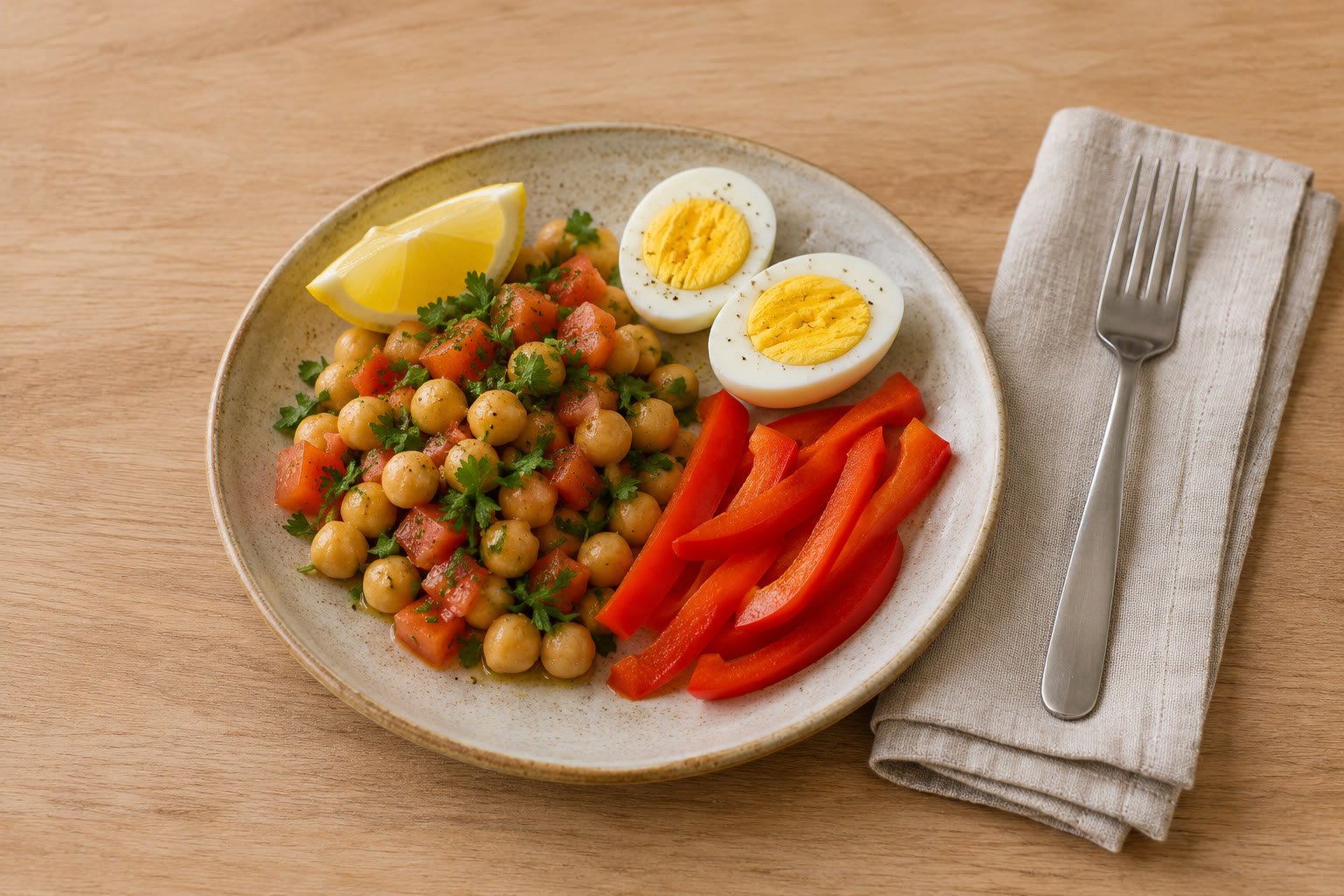
Frozen broccoli, canned beans, and other convenient ingredients count too. Bone broth can be a soup base if you like it; add beans, chicken, or tofu if you want a more substantial protein-containing meal. Read the broth's Nutrition Facts rather than assuming a standard protein amount.
What food can and cannot establish
There is strong biological evidence that vitamin C is needed for normal collagen formation; severe deficiency causes scurvy and connective-tissue problems. That does not show that extra vitamin C above adequate intake reverses wrinkles or fixes joints. The food combinations above are practical ways to meet nutrient needs, not clinical treatments.
Studies on collagen supplements also cannot be applied automatically to bone broth or gelatin desserts. A 2025 review of randomized trials found that apparent skin benefits varied with study funding and quality; its higher-quality-study analysis did not find significant improvements in the examined skin outcomes. Other reviews reach more favorable overall estimates, so the evidence remains contested. This article makes no promise about a particular supplement or food.
If you are considering a supplement, compare its actual source, ingredient list, serving, allergen statement, and cost. Animal-derived collagen may conflict with a vegetarian or vegan diet; marine formulas often derive from fish. Our best collagen supplements guide explains product formats and labels. Supplements are optional and cannot replace a varied diet.
Frequently asked questions
Does eating collagen create collagen in my skin?
Dietary collagen is digested into amino acids and peptides. Your body uses nutrients according to its needs; a serving of broth or gelatin has not been shown to deliver intact collagen to a particular body part.
Do vegetarians need animal collagen to make collagen?
No. The body synthesizes its own collagen using nutrients from the diet. Plant protein foods, fruits, vegetables, nuts, and seeds can contribute the relevant building blocks and cofactors.
Is bone broth necessary?
No. Its collagen-derived protein varies by preparation and product. You can meet protein and vitamin C needs from many other foods.
Should I take extra vitamin C for my skin?
Adequate vitamin C is necessary for normal collagen formation. That does not establish a skin benefit from large extra doses in people already getting enough. See the vitamin C guide for the evidence and intake guidance.
Bottom line
Choose regular protein foods and vitamin C-rich produce, with varied sources of copper and zinc. These are useful collagen production foods because they supply nutrients the body uses; they are not a promise of visible skin changes or pain relief. If you have a medical condition or dietary restriction, a registered dietitian or clinician can help tailor the plan.